· Szymon Berski · Portfolio · 5 min read
Enhanced WP REST API Plugin
Open-source WordPress plugin extending REST API for headless CMS architectures. Features GA4 analytics integration, Polylang translation data for proper hreflang SEO implementation, relative URLs, and headless mode with 301 redirects.
Enhanced WordPress REST API
I developed an open-source WordPress plugin that extends the REST API specifically for headless CMS architectures. The plugin enables WordPress to function as a robust backend API while modern frontend frameworks like Astro, Next.js, or Nuxt handle the presentation layer.
The Problem
WordPress’s default REST API provides basic functionality but lacks essential features for production headless implementations:
- Incomplete data structures requiring multiple API calls
- Absolute URLs causing issues across environments (dev, staging, production)
- No built-in analytics integration for popular posts
- Limited multilingual support
- Missing headless mode redirects
- No custom taxonomy ordering
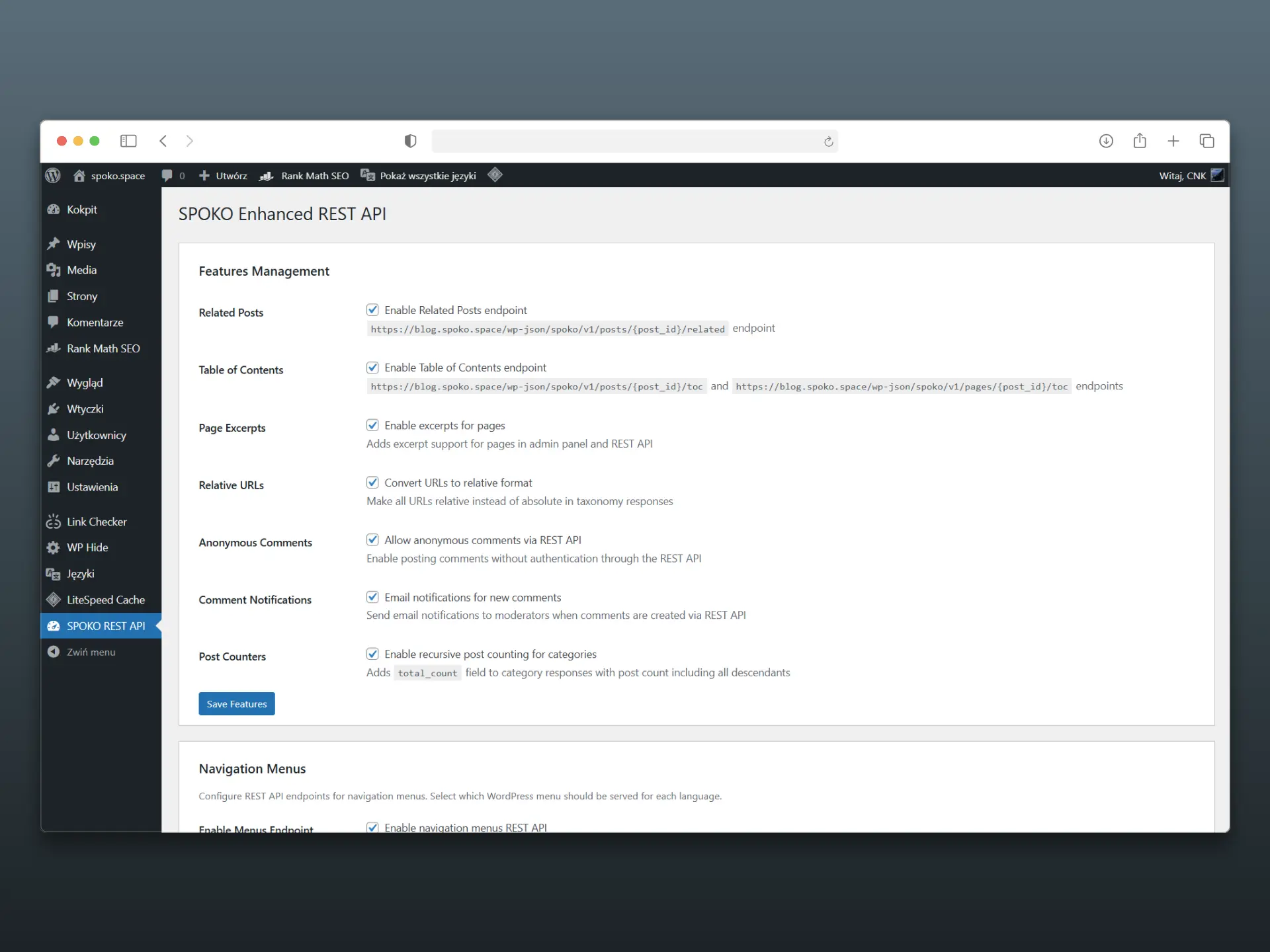
This plugin solves these challenges with a comprehensive set of enhancements designed from real-world headless WordPress projects.

Key Features
Enhanced Data Structure
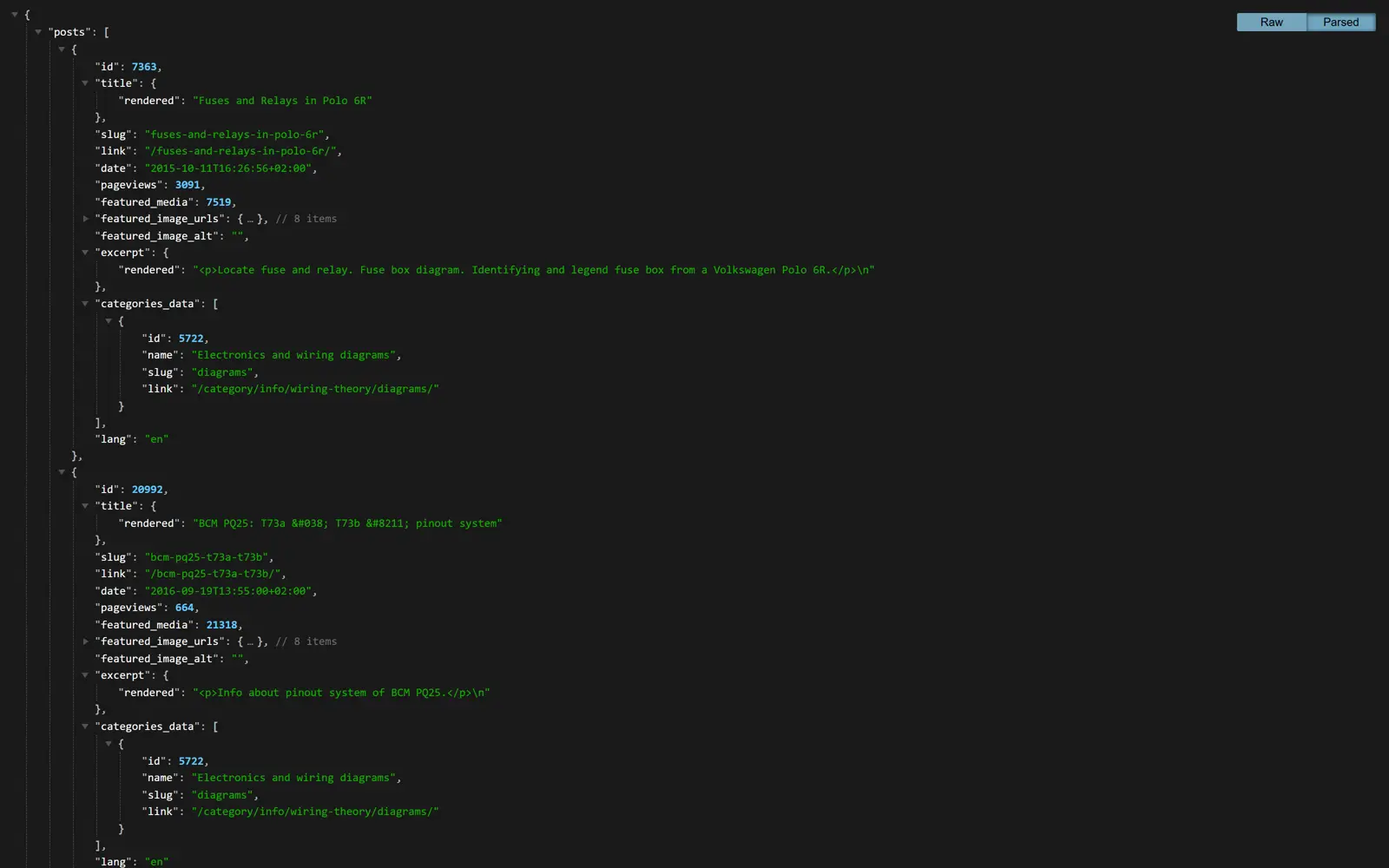
The plugin enriches standard REST API responses with additional fields that frontend applications need:
Extended Author Data - Complete author information including ID, name, nicename, avatar URL, description, and relative author page links in a single response. No need for separate /users endpoint calls.
Multiple Image Sizes - The featured_image_urls field provides all registered WordPress image sizes (thumbnail, medium, large, full), eliminating the need for additional API calls to fetch different dimensions for responsive images.
Reading Time Estimates - Automatic calculation of estimated reading duration based on content length (e.g., “5 min read”), useful for blog layouts and improving user experience.
Rich Taxonomy Information - Expanded category and tag data with descriptions, post counts, parent category IDs, and relative URLs in the main post response.
Environment-Agnostic URLs
All URLs in API responses are converted to relative paths (e.g., /blog/post-name/ instead of https://example.com/blog/post-name/). This applies to:
- Post permalinks
- Author page URLs
- Category and tag archive URLs
- Featured image URLs
- Translation URLs (when Polylang is active)
Benefits:
- Consistent behavior across development, staging, and production environments
- No need for environment-specific configuration or search-replace operations
- Easier deployment workflows and testing
- Frontend can construct full URLs with its own domain
Polylang Integration
Seamless multilingual support when Polylang plugin is active:
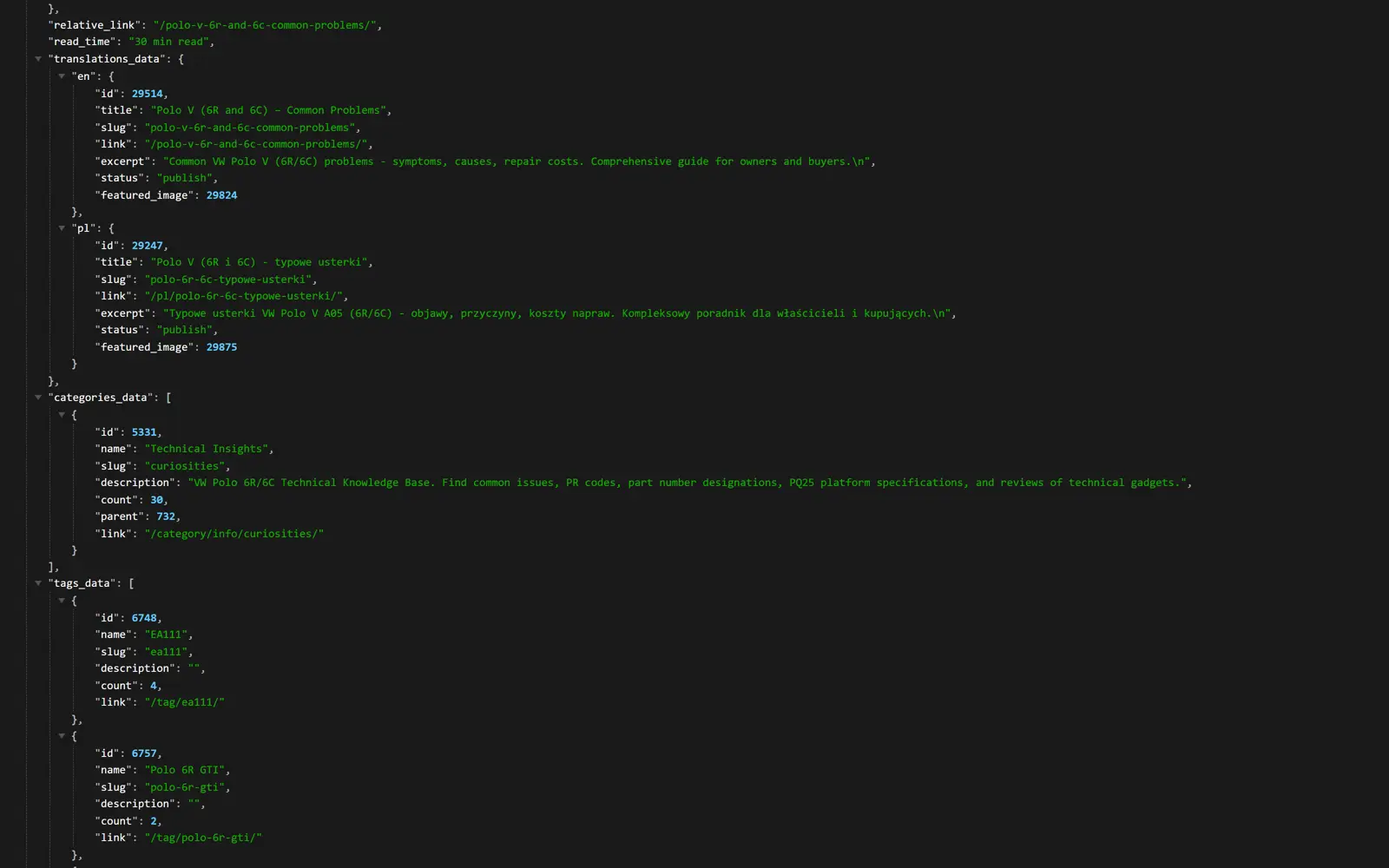
Translation Data - The translations_data field exposes all available translations for posts, categories, and tags with complete information:
- Post translations include ID, title, slug, excerpt, status, featured image ID, and relative link
- Category/tag translations include ID, name, slug, and relative link
- Perfect for building language switchers in headless frontends
- Critical for SEO - enables proper
hreflangtag implementation in Astro and other frontend frameworks, which was previously impossible to achieve efficiently without this data in the REST API response
Available Languages - Lists all site languages in the available_languages field
Language Filtering - Automatic language-aware API queries respect current language context
Why this matters for SEO: Without the translations_data field, implementing proper hreflang tags in a headless architecture would require additional API calls for each translation, making it impractical for static site generation. This plugin solves this problem by providing all translation URLs in a single response, enabling search engines to correctly identify language variants and serve the right content to users.
GA4 Analytics Integration
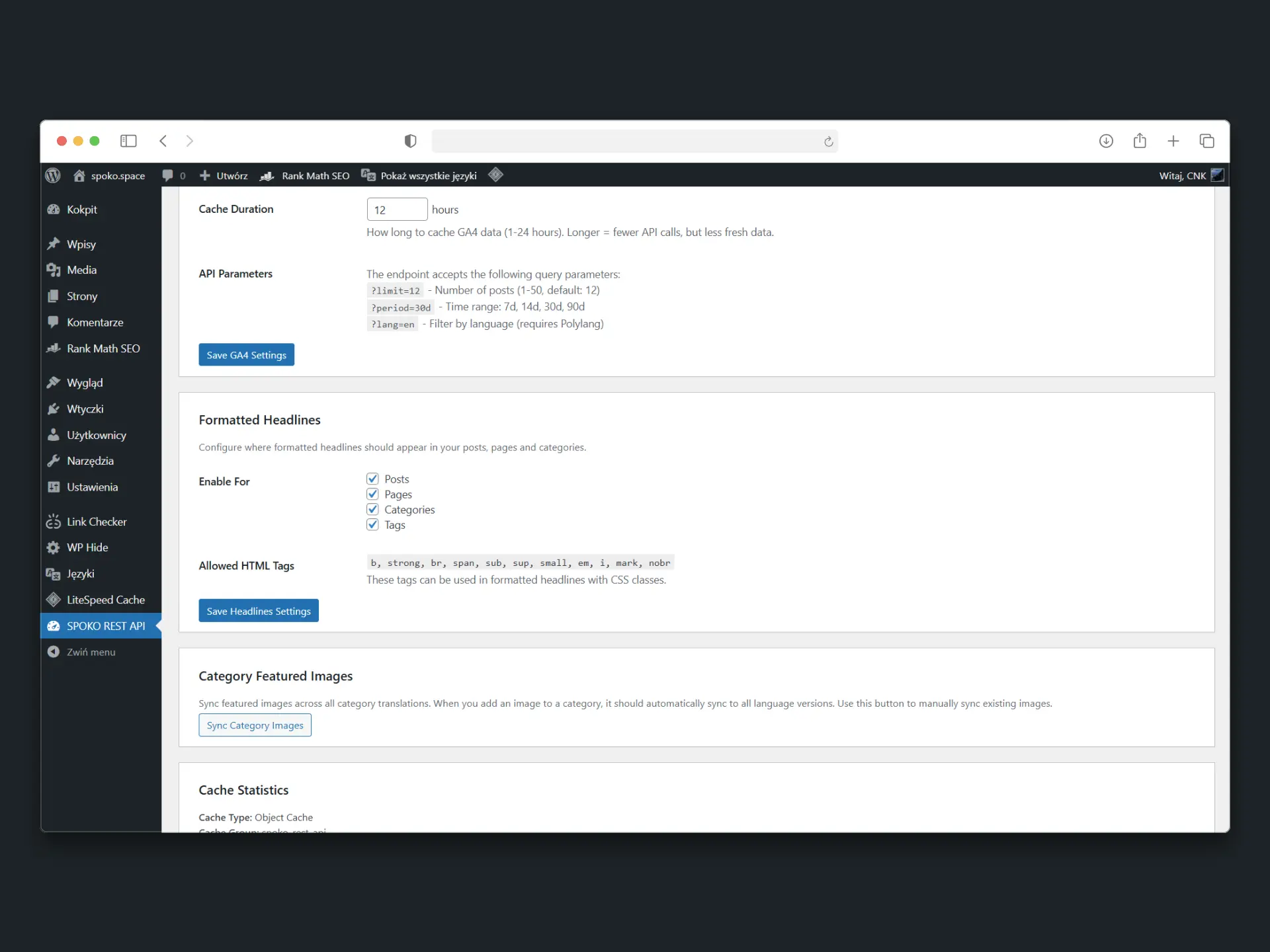
Fetch popular posts based on real Google Analytics 4 pageview data instead of simple view counters:
Features:
- Posts ranked by actual pageviews from GA4
- Configurable time periods: 7, 14, 30, or 90 days
- Language filtering for multilingual sites (Polylang integration)
- Smart caching with configurable duration (1-24 hours)
- JWT-based service account authentication
- No Google SDK required - lightweight implementation using WordPress HTTP API
API Endpoint:
/wp-json/wp/v2/posts/popular?limit=6&period=7d&lang=plResponse includes:
- Post data with all enhanced fields
- Pageview counts for each post
- Cache status and timestamp
- Total results and period information
This enables dynamic “trending posts” sections based on actual user behavior, perfect for increasing engagement and content discovery.
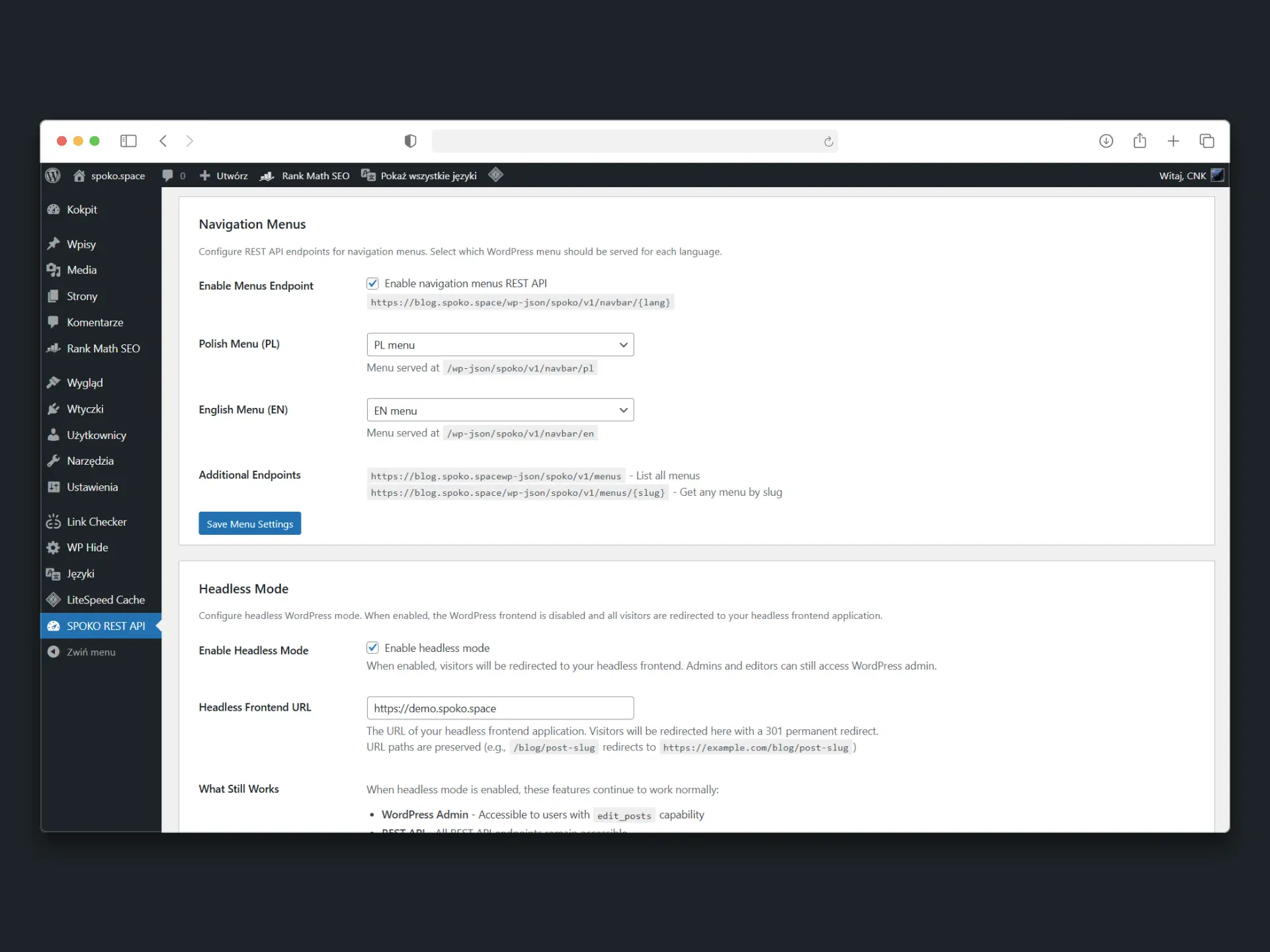
Headless Mode
Optional complete frontend redirect functionality for true headless WordPress:
How it works:
- 301 redirects send all frontend visitors to your headless application
- Original URL paths are preserved for SEO (e.g.,
/blog/post-slug→https://frontend.com/blog/post-slug) - Admin panel remains accessible for authorized users (
edit_postscapability) - REST API, GraphQL, WP-CLI, and CRON continue functioning normally
Benefits:
- Maintain WordPress as a pure backend/CMS
- Prevent duplicate content issues
- Proper SEO-friendly redirects
- No need for separate headless mode plugins
Custom Taxonomy Ordering
Support for ordered categories and tags via term_order parameter:
/wp-json/wp/v2/categories?orderby=term_order
/wp-json/wp/v2/tags?orderby=term_order
Respects manual taxonomy ordering from plugins, ensuring consistent navigation across WordPress admin and headless frontend. Categories default to ascending order.
Comments API Enhancement
Optional REST API configuration for anonymous commenting:
- Allow unauthenticated comment submission via REST API
- Configurable moderator email notifications for new comments
- Perfect for Jamstack contact forms and headless comment systems
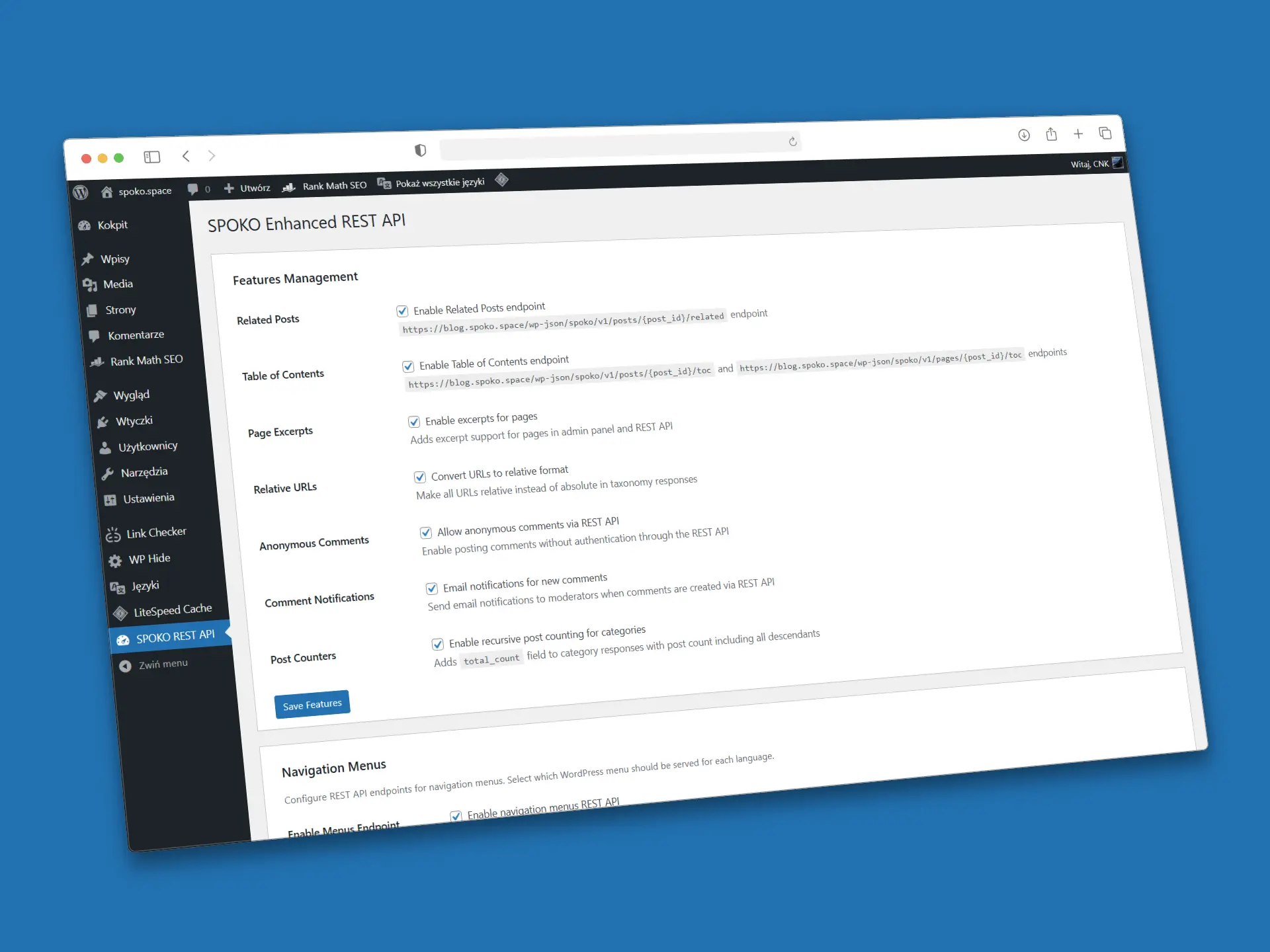
- All configured through WordPress admin panel
Code Example
// Fetch posts with all enhanced data
fetch('/wp-json/wp/v2/posts')
  .then(res => res.json())
  .then(posts => {
    const post = posts[0];

    // Relative URLs ready for frontend
    console.log(post.relative_link);        // "/blog/post-title"
    console.log(post.author_data.url);      // "/author/john-doe"

    // Complete author data in one response
    console.log(post.author_data);
    // {
    //   id: 1,
    //   name: "John Doe",
    //   nicename: "john-doe",
    //   avatar: "/path/to/avatar.jpg",
    //   description: "Author bio...",
    //   url: "/author/john-doe"
    // }

    // All image sizes available
    console.log(post.featured_image_urls);
    // {
    //   thumbnail: "/uploads/image-150x150.jpg",
    //   medium: "/uploads/image-300x200.jpg",
    //   large: "/uploads/image-1024x768.jpg",
    //   full: "/uploads/image.jpg"
    // }

    // Reading time estimate
    console.log(post.read_time); // "5 min read"

    // Multilingual data (when Polylang active)
    console.log(post.translations_data);
    console.log(post.available_languages); // ["en", "pl"]
  });
Real-World Usage
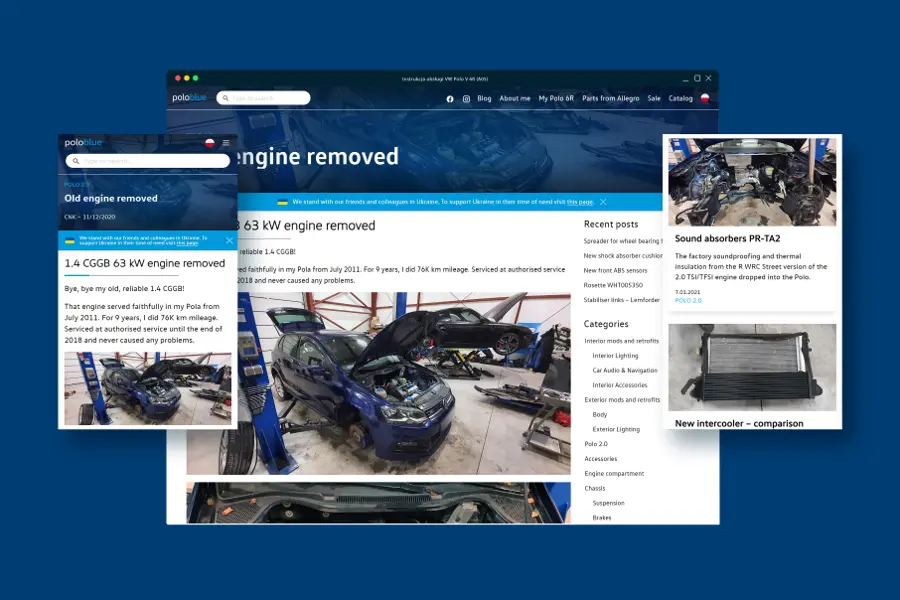
This plugin was developed for and powers the polo.blue blog - a multilingual automotive enthusiast blog built with Astro frontend and WordPress headless backend.
polo.blue Implementation:
- WordPress Backend - Content management with Polylang for Polish/English translations
- Astro Frontend - Static site generation consuming enhanced REST API
- GA4 Integration - Popular posts sections based on real pageview data
- Relative URLs - Seamless deployment across multiple environments
- Headless Mode - Complete frontend separation with 301 redirects
The plugin is also suitable for other headless WordPress implementations:
- Multilingual blogs with modern frontend frameworks
- Content sites with GA4-based trending sections
- Marketing websites with WordPress backend and Next.js/Nuxt presentation
- E-commerce content management with custom taxonomies
The plugin is actively maintained and battle-tested in production environments.
Used Technologies
WordPress
Core platform providing REST API infrastructure, authentication, content management, and plugin architecture for headless CMS implementations.
PHP
Server-side language for WordPress plugin development, implementing REST API extensions, custom endpoints, and Google API integration.
REST API
Standard API architecture enabling seamless communication between WordPress backend and modern frontend frameworks via HTTP requests and JSON responses.
Google Analytics 4
Integration with GA4 Data API using service account JWT authentication to fetch real pageview metrics for intelligent popular posts ranking.
Polylang
WordPress multilingual plugin providing translation management, with deep integration exposing language data and translations via enhanced REST API endpoints.
Astro
Primary target framework for consuming the enhanced API, enabling fast static site generation with WordPress as content source and CMS backend.
The plugin is open-source (GPL v2 or later) and available on GitHub for community contributions. All features are optional and individually configurable via the WordPress admin panel.