A canonical URL is the address a page names as the real one for its content, so a search engine that reaches it by any other route indexes the named version instead. It is a strong hint, not an instruction, and Google can overrule it.
What it is
The same content is often reachable at several addresses: with and without a tracking parameter, with and without a trailing slash, at /product/x and at /category/y/product/x. A search engine that finds all of them has to decide which one to index, and left alone it decides for itself.
The canonical is the page saying which one it wants. Every page should declare one, and on most sites that is its own address — a self-canonical, which sounds redundant and is the thing that keeps parameter variants from splitting a page into five.
Why it matters if you are paying for a website
Because duplicates dilute. Two addresses for one page means the links pointing at it are split between them and neither ranks as well as the single page would have. On a store with filters and sort parameters, that multiplies fast.
Where this site has to get it right
Every page here ships a plain-Markdown twin at the same address with a .md suffix — /blog/effective-website.md next to /blog/effective-website/. Two URLs, one document, and the question of which is canonical is not academic: the mirrors exist to be read by models and by anyone who pastes a URL into one.
The answer is that the HTML page is canonical, the mirror says so in its own header, and the .md files go out with a noindex header so they never compete for the position the page already holds. The build checks that every mirror’s **Canonical:** line points back at the page it mirrors, because a mirror that names the wrong page is worse than no mirror.
What a canonical is not
It is not a redirect — visitors still reach the non-canonical address and see the page. It is not a noindex either, and it is not binding: if the signals disagree with it, Google picks its own and reports the choice in Search Console, which is the only place you will find out.
And it is not a fix for thin duplicate pages. Two near-identical pages with a canonical between them are still two near-identical pages; the canonical decides which one is indexed, not whether either deserves to be.
Related terms
See also
Want this done, not just defined?
This is the part of the work I get hired for. The page below says what it costs and how it runs.
AI visibility auditWhere I write about this
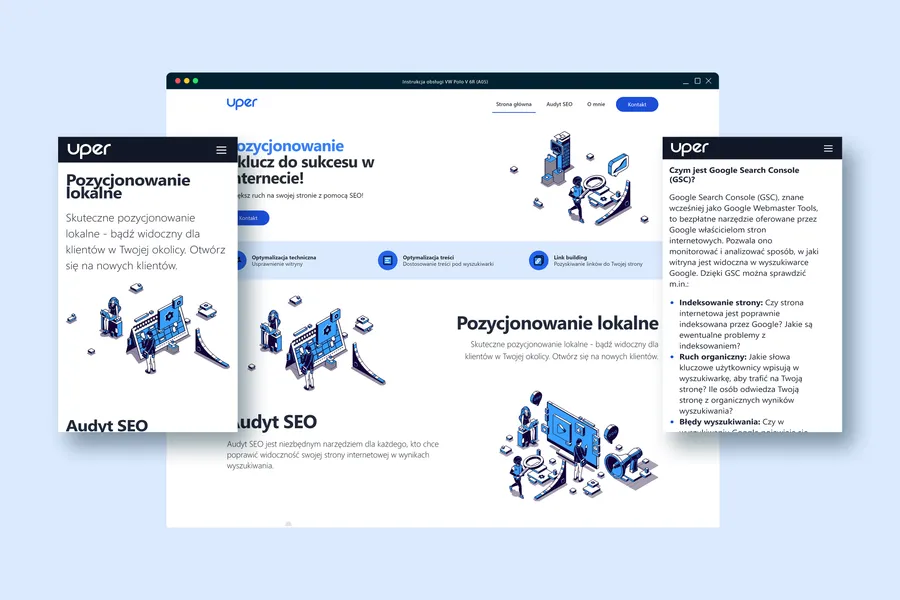
SEO agency website
Showcase for a freelance SEO expert dedicated to improving online visibility and driving organic traffic for businesses.

Magento Open Source End of Support: A Complete Guide to the Decision You Need to Make in 2026
Adobe isn't shutting down Magento tomorrow — but for Open Source, extended support never existed. Real timeline, costs, regional integrations, migration plan, and the fourth option nobody talks about.